
Pattern Matching Scanner Machine
Pattern Digitising Scanners
Pattern Matching is a process that can be time-consuming and frustrating. Here at Assyst Bullmer, we want to help remove these problems. Our scanning solutions are the best and easiest way to cut your patterned fabric and matching fabric with precision.
For manufacturers working with patterned fabric, managing a consistent pattern repeat across every pattern piece requires careful alignment and positioning of the material. Whether working with stripes, prints or complex designs, the pattern matching process ensures each pattern piece aligns at the same point across the fabric, maintaining a clean visual result across seams and edges.
Our pattern matching scanning systems automate this process, helping manufacturers avoid fabric shifting, excess fabric waste and manual alignment challenges.
Understanding the Pattern Matching Process
Pattern matching ensures each pattern piece is cut so the design aligns perfectly across seams and edges. Operators place paper patterns on fabric laid flat, often with the right side up, aligning the pattern repeat at key reference points like the centre or fold line. Depending on the design, fabric may be single-layered or folded to match patterns along seams such as the centre back or button band.
To keep pieces stable, pins or pattern weights are used, commonly pinning horizontally across seam areas to prevent shifting. Pieces are cut with seam allowances to ensure accurate sewing without losing alignment.
During sewing, matching points along prints or lines, especially at centre back seams, is crucial. A walking foot may be used to feed fabric evenly, and regular stitch length maintains consistent seam allowances. The process often involves two stages of alignment and checking, particularly with large or complex prints, to avoid fabric shifting and excess waste
About Pattern Matching & Scanners
The scanner, coupled with our cutting machines, allows customers to cut their patterns without having to worry about the repeats in patterned fabric.
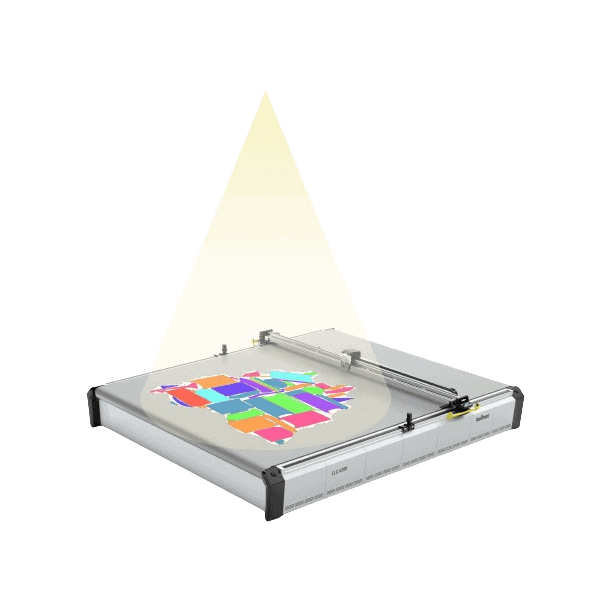
The scanning beam sits at the material end of the cutter and scans the fabric as it is being fed onto the cutting machine. As the patterned fabric passes through the scanner, the system detects the pattern repeat, identifying the centre line and repeat position across the whole length of the fabric.
Once the pattern matching system identifies the repeat point, it automatically creates an optimised nest, so every pattern piece is cut in the correct position. This ensures that seams such as the centre back seam or back seam match correctly across the same pattern line.
This automated pattern-matching process removes the need for manual alignment methods typically used in sewing and fabric preparation, such as laying a paper pattern on a flat surface, aligning the fold line, or carefully positioning pins along the crease line.
For sewing applications in upholstery, fashion and automotive interiors, maintaining alignment between pattern pieces is essential. Traditional sewing techniques often require pins, pattern weights, careful folding and seam allowance adjustments to match patterned fabric. Operators may lay fabric on a flat surface, fold along the fold line and pin horizontally across the seam line to ensure both sides match before sewing.
However, these manual processes can involve two stages of checking alignment and repositioning pattern pieces, especially when working with large prints, stripes or repeated patterns. Even small differences between the top layer and backing fabric can cause fabric shifting during sewing.
Assyst Bullmer scanning technology removes this hard work by automatically detecting the repeat point and matching pattern positions before the cutting process begins.
Automated Pattern Matching for Fabric Cutting
Our pattern-matching scanners are designed to help manufacturers create accurate pattern alignment across a wide range of fabrics.
The system scans the patterned fabric surface and identifies key points within the print, ensuring each pattern piece is cut from the correct position. This ensures seams match perfectly when pieces are joined during sewing.
The scanner detects pattern repeat positions across the fabric width and length, allowing the cutting system to position each piece accurately. This prevents mismatched prints along the centre back seam, button band edges or other visible seam lines.
With automated pattern-matching fabric detection, manufacturers can:
• Reduce excess fabric waste
• Maintain consistent pattern alignment
• Improve production speed
• Reduce manual sewing preparation work
• Ensure seam allowance consistency across pattern pieces
This makes the system particularly helpful for industries working with high-value patterned fabric.
Leather Scanning & Quality Detection
Leather Scanning is also available. With the use of an overhead projector, we are able to scan whole hides and detect quality zones within the Hide. Once scanned, the pattern design software will automatically nest your patterns with the hide, avoiding low-quality zones and flaws within the hide, ensuring your pieces are always of the best quality.
This ensures that every cut piece is positioned correctly within the hide, maintaining material quality while reducing waste. The software automatically creates the best pattern layout so manufacturers can maximise usable leather while maintaining consistent production quality.
Industries Using Pattern Matching Scanning
Our pattern matching and scanning systems are widely used across industries that rely on patterned fabric alignment and precision cutting.
These include:
• Upholstery
• Fashion
• Carpet
• Automotive interiors
In these industries, pattern matching plays a key role in ensuring seams align correctly and finished products maintain consistent visual quality.
Frequently Asked Questions
What is fabric pattern matching, and why is it important?
How does the pattern-matching process work when cutting patterned fabric?
How do you match different fabric patterns accurately?
What problems occur when manually pattern-matching fabric?
How do automated pattern-matching scanners improve fabric cutting?