Why Traditional Cutting Struggles in High-Mix, Low-Volume Manufacturing
High-mix, low-volume manufacturing has become standard across technical textiles, automotive interiors, aerospace industry supply chains, and medical devices. Demand is increasingly centred on tailored solutions delivered in small quantities, often within compressed lead times. Instead of stable, repeatable production runs, manufacturers manage frequent changeovers and a range of product variations.
In this environment, low production volumes increase the sensitivity of each setup decision. When you produce in small batches, preparation time represents a larger share of total effort. High-mix conditions amplify this effect by increasing the number of transitions among materials, geometries, and configurations.
Production planning becomes more dependent on accurate cutting data and reliable job release. Unlike low-mix, high-volume production lines, where repetition allows processes to stabilise, high-mix, low-volume manufacturing requires coordination that can absorb variation without disrupting flow.
Key Takeaways
- Traditional cutting methods struggle in high-mix, low-volume manufacturing due to frequent changeovers, small batch sizes, and manual nesting, resulting in increased setup times and variability.
- Inefficient cutting processes impact cost efficiency, production planning, inventory control and quality assurance across diverse product variations.
- Lean manufacturing principles, such as value stream mapping and standardisation, help reduce setup times and improve flow without increasing batch sizes.
- Automated cutting systems and intelligent nesting software designed for HMLV environments enhance material utilisation, quality consistency and production scheduling accuracy.
Why Traditional Cutting Is Built for High Volume, Not High Mix
Traditional cutting processes were developed for mass production. Marker layouts were designed for reuse; batch production logic justified extended setup times; and production lines remained configured for extended periods. These approaches align with high-volume manufacturing, where economies of scale absorb inefficiencies.
In high-mix, low-volume manufacturing, repetition is limited. Each job may require new marker preparation, parameter adjustment and material verification. Small quantities reduce the opportunity to dilute setup effort across large runs. When cutting processes continue to operate as though repetition will occur, setup effort directly reduces available capacity, and lead times become less predictable.
Manual nesting and static workflows introduce additional variability. Processing time becomes dependent on operator workload and interpretation. In high-volume environments, this can be masked by scale. In low-volume manufacturing, it becomes visible in material yield, throughput and schedule reliability.
Setup Time as a Structural Constraint in HMLV Production
Frequent changeovers are inherent to HMLV production. File preparation, lay planning, calibration and material checks occur repeatedly throughout the shift. Where these activities are not streamlined, they reduce effective cutting capacity.
Increasing batch size to reduce setup frequency may improve short-term utilisation metrics, but it conflicts with make-to-order production logic. Larger batches increase work in progress and extend overall lead times. Lean manufacturing techniques and value stream mapping often identify unmanaged setup and preparation time as persistent sources of instability in high-mix, low-volume environments.
The Impact on Cost, Planning and Quality
The consequences of cutting instability extend beyond the cutting table. In low-volume manufacturing, material utilisation directly influences cost effectiveness. Nesting layouts are often unique, and manual optimisation produces inconsistent yield. Offcuts accumulate, and inventory control becomes more complex, particularly when specialised components or technical textiles are involved.
Production scheduling is also affected. When cutting cycle times vary and release timing shifts, production planning relies on assumptions rather than measured performance. Resource allocation becomes reactive, increasing the risk of missed lead times. In volatile demand conditions, this reduces responsiveness to customer demand.
Quality control pressures intensify under high-mix conditions. Product variations introduce different tolerances, materials and inspection requirements. Traditional cutting approaches often rely heavily on operator experience. While skill remains essential, variability increases when processes are not system controlled. In the aerospace industry and medical devices applications, maintaining quality and ensuring consistent quality across small batches requires repeatable execution and traceability.
Root cause analysis of downstream defects frequently highlights upstream inconsistency. Improving cutting accuracy reduces rework, stabilises inspection processes and supports quality assurance across diverse product variations.
Lean Manufacturing Principles for Cutting in High-Mix, Low-Volume Production
Lean manufacturing remains relevant in high-mix, low-volume manufacturing, although its emphasis shifts from repetition to stability under variation. Lean manufacturing techniques focus on reducing setup time, eliminating waste and supporting a pull system aligned with make-to-order demand.
Value stream mapping is particularly effective in HMLV environments because it separates processing time from waiting time. Mapping cutting activities often reveals that preparation and batching introduce more delay than the cutting process itself.
Reducing changeover time without increasing batch size is central to improving flow. Standardising preparation steps, improving digital data transfer and reducing manual intervention shorten transitions between jobs. This supports production flexibility without extending lead times.
When cutting performance is stable and predictable, production planning becomes more accurate, resource allocation more deliberate and quality control more consistent across low production volumes.
Why Choose Assyst Bullmer?
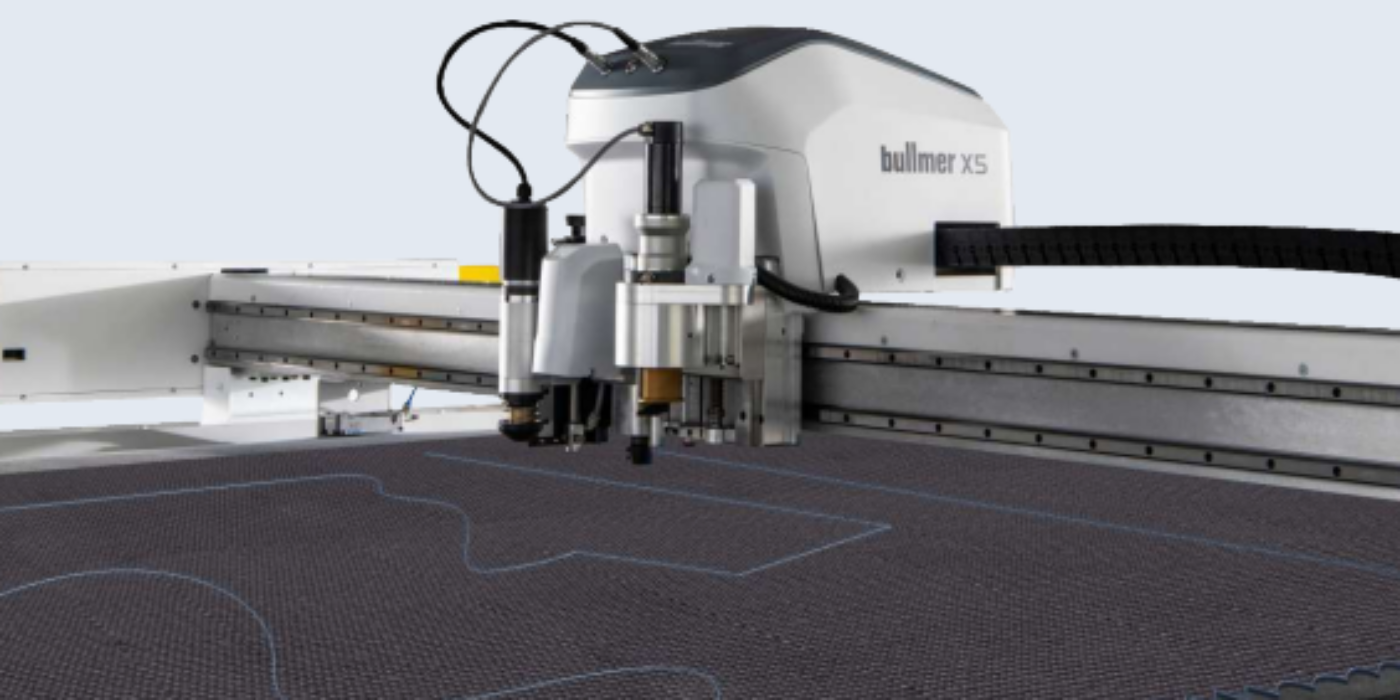
We provide automated cutting systems and intelligent nesting software designed specifically for high-mix, low-volume production environments. Our automated cutting technology and advanced nesting algorithms optimise material utilisation and deliver repeatable cutting accuracy across small batches and varied geometries.
Integration with digital manufacturing systems enables cutting data to feed directly into production planning and scheduling. This improves visibility of cycle times, material usage and job status, strengthening resource allocation and reducing uncertainty in lead times.
For manufacturers in automotive interiors, technical textiles, composites and aerospace applications, our systems support higher material efficiency, reduced manual intervention and more stable upstream control.
By aligning automated cutting and intelligent nesting with lean manufacturing principles, we help manufacturers operate efficiently in high-mix, low-volume environments without reverting to inefficient batch logic.
To see how automated cutting and nesting software can strengthen your high-mix, low-volume production performance, contact us today.
Summary
High-mix, low-volume manufacturing exposes the limitations of cutting systems developed for mass production. Small quantities, frequent product variations and increased setup frequency make preparation time and nesting performance critical to overall efficiency.
Traditional cutting methods struggle because they rely on batch logic, manual nesting and workflows that assume repetition. In HMLV production, this increases setup sensitivity, reduces consistency in material utilisation and complicates production planning. Variability at the cutting stage affects cost efficiency, inventory control and the ability to maintain quality across diverse orders.
Addressing these challenges requires cutting technology aligned with high-mix, low-volume manufacturing rather than adapted from high-volume environments. When cutting is integrated into broader manufacturing systems, supported by advanced nesting and structured around lean manufacturing principles, it contributes to more predictable lead times, stronger quality control and improved operational stability.
For manufacturers operating in high-mix, low-volume environments, strengthening the cutting stage is one of the most direct ways to improve flow and protect performance across the entire production system.
Frequently Asked Questions
What is high-mix, low-volume manufacturing?
Why does traditional cutting struggle in high-mix, low-volume environments?
What is considered low volume in manufacturing?
How does cutting performance affect production planning in HMLV manufacturing?
How can manufacturers improve cutting efficiency in high-mix, low-volume production?