How Manufacturers Can Reduce Material Waste Without Slowing Production
Since 2020, volatility across steel, technical textiles, plastics, energy, and logistics has turned material waste from a background inefficiency into a board-level concern. Raw material costs that once crept upwards now spike with little warning, putting pressure on margins that many manufacturers were already struggling to protect.
For manufacturing companies, the challenge is clear. Reducing material waste is one of the fastest and most controllable ways to reduce costs, yet many teams worry that aggressive waste reduction will slow production, introduce risk, or compromise product quality. In practice, the opposite is often true. Well-executed waste reduction strategies usually increase efficiency, stabilise production flows, and improve reliability.
Material waste in manufacturing is rarely confined to obvious scrap bins beside machines. It includes offcuts from cutting operations, rejected finished products, start-up losses, overfill, damaged packaging materials, excess inventory written off at stocktake, and materials quietly lost between process steps. These losses accumulate across the manufacturing process, often unnoticed until margins tighten.
This article explains how to reduce material waste in manufacturing without slowing production. It focuses on practical, proven approaches that manufacturers can apply within existing facilities, combining lean manufacturing principles, digital tools, closed loop manufacturing, and smarter use of equipment.
Map and Measure Material Flows
Waste reduction starts with understanding how materials actually move through your production process, not how they are assumed to move. Mapping material flows reveals where waste is created, where materials wait unnecessarily, and where handling damage occurs.
Create a Material Balance
Begin by creating a simple material balance for one production line or product family. Track all raw materials entering the manufacturing process and compare them against finished products, scrap, rework, and unexplained loss.
This exercise often highlights uncomfortable truths. Unexplained losses frequently account for one to two percent of total material usage, sometimes more. When investigated, these losses are usually linked to poor handling, incorrect settings, or undocumented process variation rather than theft or accounting errors.
Once a baseline is established, even small improvements become visible. Teams can see immediately whether waste reduction actions are working or whether problems are simply shifting elsewhere.
Value Stream Mapping and Stream Mapping
Value stream mapping and stream mapping provide a visual view of production flows. They highlight unnecessary steps, excess handling, waiting time, and bottlenecks that lead directly to waste produced.
These tools are particularly effective at identifying upstream overproduction caused by downstream constraints. When one process runs faster than the next, excess inventory builds, increasing the risk of damage, obsolescence, and scrapping.
Mapping sessions are most effective when operators, engineers, and planners are involved together. Each group sees different forms of waste, and combining perspectives accelerates problem identification.
Prioritise High-Impact Materials
Not all materials deserve equal attention. Focus first on raw materials with the highest cost, highest volume, or highest scrap rate.
In many manufacturing environments this includes sheet metal, technical fabrics, composite materials, plastic films, and high-value packaging materials. Improvements here deliver the most significant impact on operational costs.
Improve Material Planning, Inventory, and Purchasing
Material waste is often created long before production starts. Poor forecasting, oversized orders, and misaligned batch sizes all increase manufacturing waste.
Forecasting and Supply Chain Alignment
Improving forecasting accuracy through ERP and MRP systems helps manufacturers reduce waste while protecting service levels. Better alignment with the supply chain reduces emergency orders, overbuying, and unnecessary safety stock.
In volatile markets, forecasting should be reviewed more frequently. Shorter planning cycles allow purchasing decisions to respond to real demand rather than outdated assumptions.
Excess Inventory and Stock Rotation
Excess inventory ties up capital and increases waste risk. Materials stored for long periods are more likely to be damaged, expire, or become obsolete.
Implement FIFO or FEFO systems depending on material type, supported by clear labelling and regular audits. Many manufacturers discover that expired or damaged materials account for a surprising share of total waste.
Order Unit Optimisation
Ordering materials in units that do not match production batches creates unavoidable waste. Reviewing roll lengths, sheet sizes, and pallet quantities can significantly improve material usage.
Where possible, work with suppliers to adjust delivery formats. Small changes here often deliver permanent waste reduction without affecting production speed.
Redesign Products and Packaging to Use Less Material
Design decisions lock in material usage for years. Addressing waste at the design stage is one of the most powerful waste reduction strategies available.
Lightweighting and Standardisation
Lightweighting components, reducing thickness where possible, and standardising sizes improve cutting yield and reduce offcuts. These changes often also reduce transport costs and energy use.
Standardisation improves nesting efficiency and simplifies planning, making the entire manufacturing process more predictable and efficient.
Packaging Waste Reduction
Packaging waste is frequently underestimated. Over-specified packaging materials increase raw material costs and disposal volumes without improving protection.
Redesigning packaging to use fewer materials, eliminate mixed substrates, and improve recyclability reduces both cost and environmental impact.
Implement Lean Manufacturing to Eliminate Process Waste
Lean manufacturing focuses on eliminating waste while maintaining flow. Applied correctly, lean manufacturing principles reduce material waste without slowing production.
Standardised Work and Smaller Batches
Standardised work reduces variation, errors, and rework. When every operator follows the same proven method, first-pass yield improves and scrap rates fall.
Smaller batch sizes reduce overproduction and limit the scale of losses when defects occur. They also improve responsiveness to demand changes.
Continuous Improvement and Kaizen
Continuous improvement programmes focused on material yield deliver cumulative gains over time. Small improvements implemented consistently often outperform large, one-off projects.
Kaizen events that focus specifically on material usage help teams identify waste they have learned to tolerate.
Closed Loop Manufacturing and Reuse Strategies
Closed loop manufacturing keeps materials in productive use rather than sending them to landfill or low-grade recycling.
Segregation and Waste Streams
Segregating waste streams at source preserves material value. Clean, separated waste streams are easier to reuse or recycle efficiently.
Clear labelling, colour coding, and regular audits prevent contamination that destroys recycling value.
Waste Management Machinery
Waste management machinery such as balers, compactors, granulators, and shredders reduces waste volume and prepares materials for reuse or sale. These systems reduce handling time and improve housekeeping.
Digitalise Material Tracking and Process Control
As waste reduction initiatives mature, manual processes start to hold teams back. End-of-shift counts, spreadsheets, and delayed reports make it difficult to see problems early enough to stop waste escalating. By the time an issue appears in a weekly or monthly report, the material has already been lost.
Digital tools change the dynamic. They give manufacturers real time visibility into what is happening inside the production process, allowing action while material is still being processed, not after it has been scrapped.
Real Time Visibility and System Integration
Integrating MES and ERP systems allows planned material usage to be compared against actual consumption in real time. Variances become visible immediately rather than days later.
This visibility supports faster, calmer decision-making. Operators can adjust parameters as soon as scrap rates rise. Supervisors can intervene before problems spread across shifts. Engineers can investigate root causes while conditions are still present, rather than relying on memory.
Real time dashboards on the shop floor reinforce accountability. When waste, yield, and efficiency are visible to everyone, behaviour changes naturally without constant management pressure.
Automated Cutting and Nesting
In material-intensive manufacturing, cutting accuracy and layout efficiency have a disproportionate impact on waste. Manual layout decisions introduce variation, especially across shifts, products, and operators.
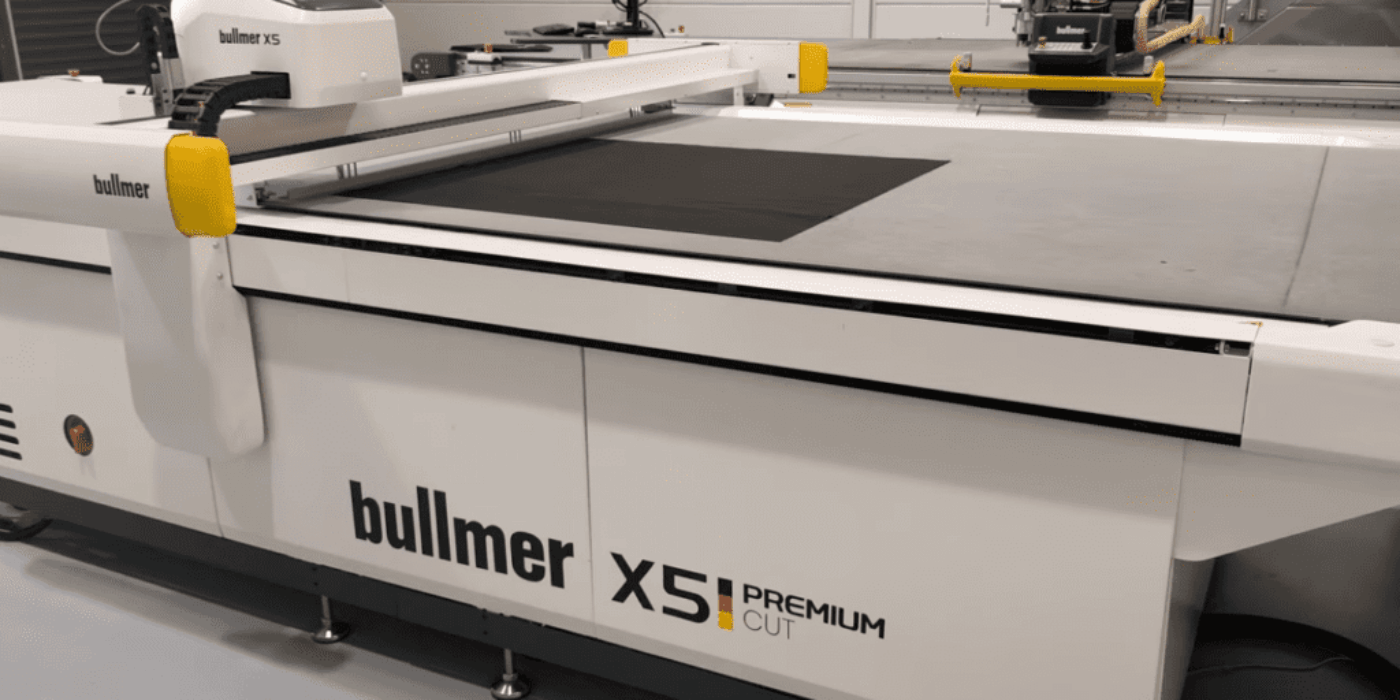
Automated cutting systems with advanced nesting software optimise material usage before the first cut is made. Offcuts are minimised, consistency improves, and yield becomes predictable.
Rather than slowing production, automation usually increases throughput. Fewer interruptions, less rework, and more stable production flows allow lines to run faster with fewer stops.
Maintain Equipment to Prevent Scrap and Instability
Even well-designed processes generate waste when equipment performance is inconsistent. Worn tools, misalignment, temperature drift, and poor calibration all show up as scrap, rework, and quality variation.
Preventative maintenance is therefore a waste reduction strategy, not just a reliability exercise.
Moving from reactive maintenance to scheduled and condition-based maintenance stabilises the manufacturing process. Stable machines produce stable results, which is essential when minimising waste at speed.
Condition monitoring techniques such as vibration analysis, thermal inspection, and sensor feedback allow maintenance teams to intervene before failures occur. This prevents the sudden spikes in waste that often accompany breakdowns and rushed recoveries.
Involve and Empower People to Sustain Waste Reduction
Technology and process changes alone do not sustain waste reduction. Long-term success depends on the people running the production process every day.
Operators, technicians, and supervisors see material losses as they happen. Engaging them turns waste reduction from a project into normal working practice.
Training should focus on recognising different forms of waste, understanding why they matter, and knowing what to do when waste increases. When people understand the commercial and operational impact, they act faster and more consistently.
Visual management tools such as scrap boards, trend charts, and clearly defined waste streams make performance tangible. Regular feedback and simple suggestion schemes reinforce continuous improvement and prevent drift back to old habits.
Why Choose Assyst Bullmer
As manufacturers move from basic waste reduction initiatives to sustained material efficiency, the limits of generic equipment and manual processes become clear.
At Assyst Bullmer, we design cutting and automation solutions specifically for material-intensive manufacturing environments where waste reduction and production speed must coexist.
Our systems optimise material usage before cutting begins. Intelligent nesting software maximises yield from every sheet or roll, reducing raw material costs and cutting waste without slowing the production process. With the right cutting technology in place, manufacturers do not have to choose between efficiency and speed. Both improve together.
Summary
Reducing material waste is often framed as a cost-cutting exercise. In reality, it is one of the most effective ways to stabilise operations, improve efficiency, and build resilience against volatile raw material costs.
Manufacturers that combine clear measurement, lean manufacturing principles, digital visibility, and advanced cutting technology consistently reduce waste without slowing production. In many cases, throughput, quality, and delivery reliability improve at the same time.
The most effective place to start is not by trying to fix everything. Begin with one high-impact material, one production line, or one clear bottleneck. Measure accurately, act quickly, and standardise what works.
Over time, these focused improvements compound. Waste reduction becomes part of how the business operates rather than a separate initiative.
For manufacturers under increasing pressure to reduce costs, improve sustainability, and remain competitive, turning material waste into an operational advantage is no longer optional. It is essential.
Frequently Asked Questions
What is a realistic timeline to see results from waste reduction initiatives?
How do I calculate the true cost of material waste?
Which materials should we focus on first when trying to cut waste?
Do small and medium-sized factories really need digital tools to reduce waste?
How can we ensure that waste reduction efforts don’t compromise product quality?